Bio Nil
P2
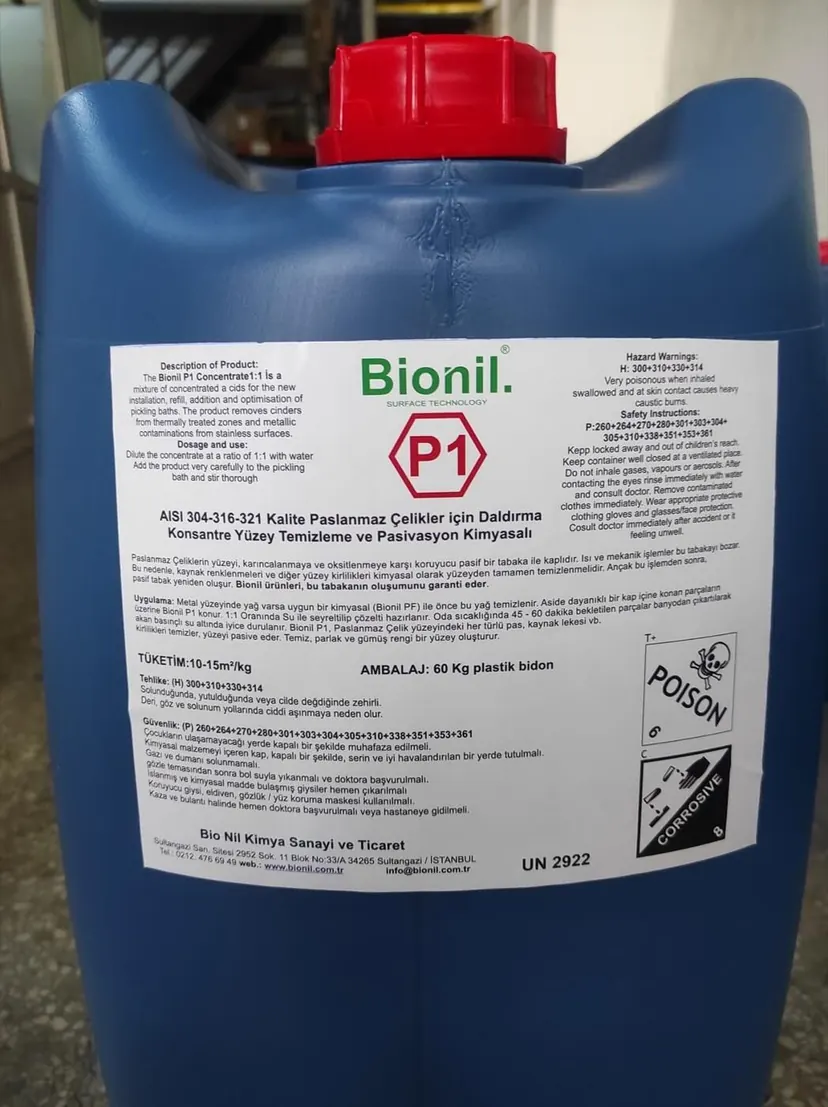
Bionil P2 Pickling Paste
Weld Stain Cleaning Paste
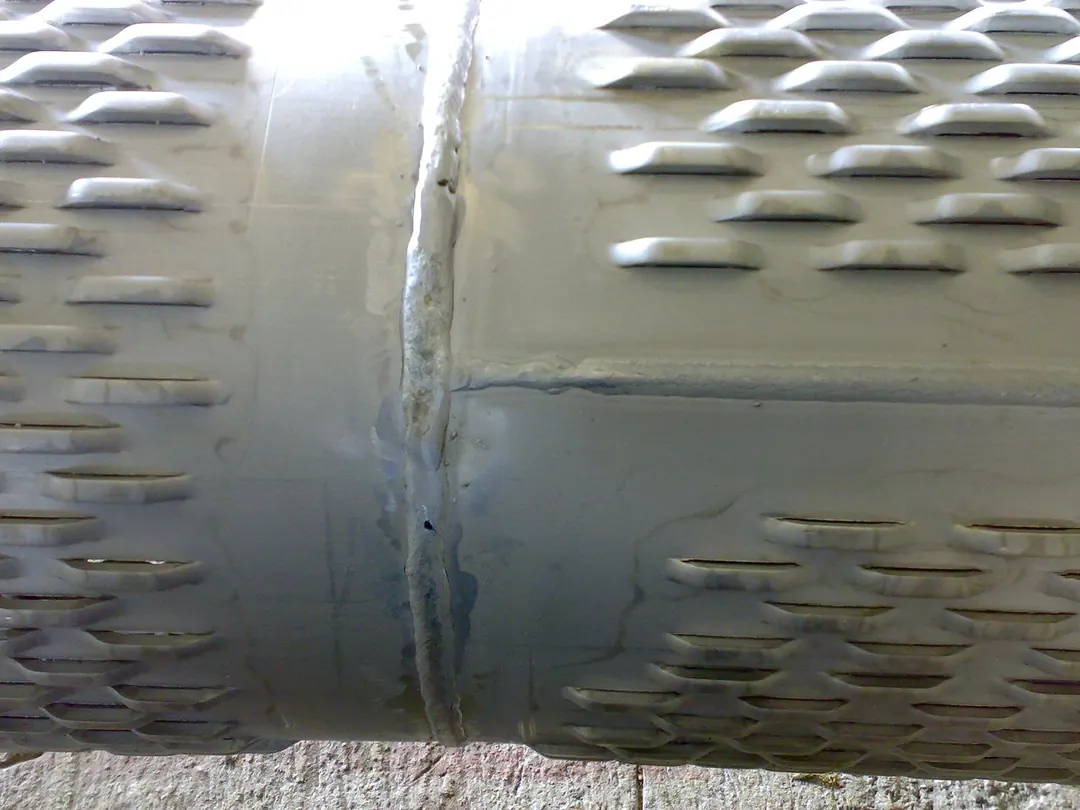
Brush-applied pickling paste that removes weld discolouration, heat-treatment scale, corrosion and rust stains from stainless steel weld zones.
View
Electrochemical Polishing and Germ-Free Surface
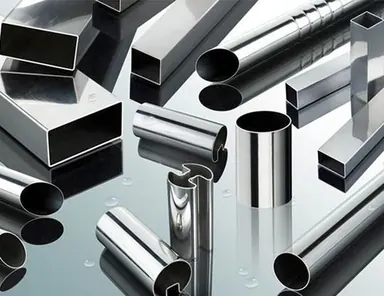
Epinox is a multi-component electropolishing liquid that, by an electrochemical method, dissolves contamination and metal from the workpiece surface and binds oxygen to the newly formed surface. Electropolishing is an electrochemical process performed to brighten stainless steel surfaces, remove burrs and create a germ-free environment. It cleans and polishes the surface by dissolving all contamination, oxidation, burrs and 15-30 microns of the base metal. A surface smoother and brighter than that obtained by mechanical polishing (Ra ≤ 1 micron) is achieved in a much shorter time. Every point of the surface has the same brightness.
| Property | Value |
|---|---|
| Form | Liquid (electrolysis) |
| Surface roughness | Ra ≤ 1 micron |
| Dissolved metal | 15-30 microns |
| Application | With an electrolysis cell |
| Certificate | Germ-free surface creation |
Place the part in the electrolysis cell
Fill the cell with Epinoks P/48 liquid
Apply current (parameters are set by a specialist)
After surface inspection, rinse with clean water
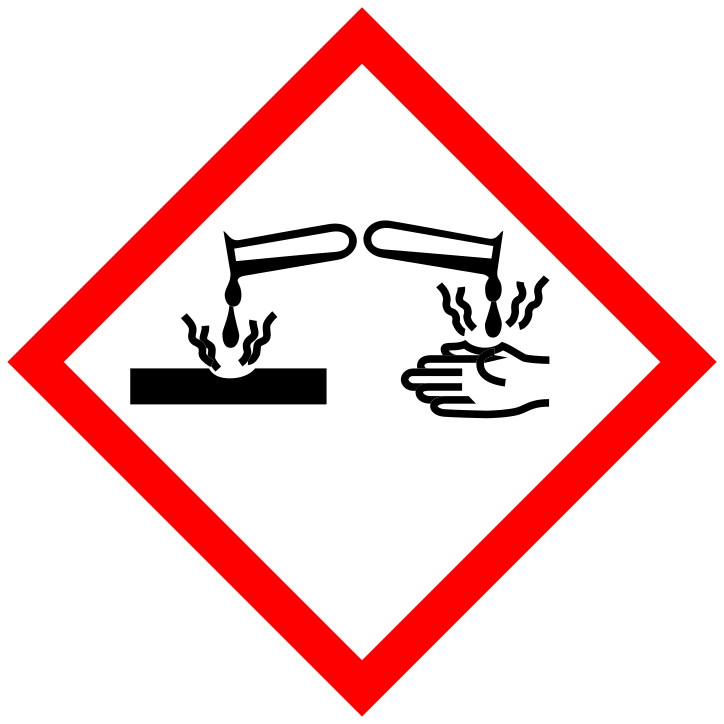
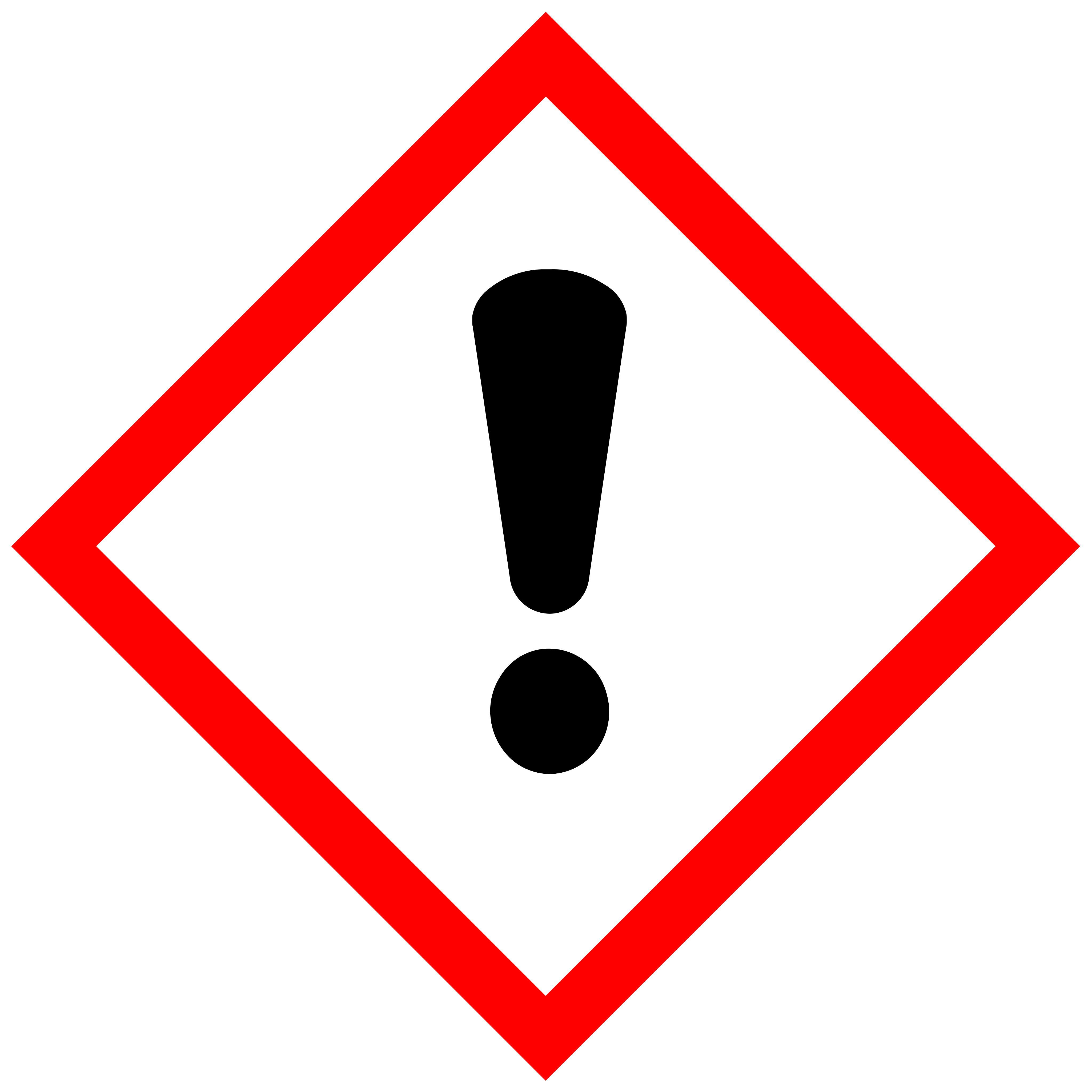
The classification above shows typical reference values for acid-based pickling/passivation products. Always refer to the product's current Safety Data Sheet (SDS/MSDS) for binding information; contact us for product-specific classification.
Mechanical polishing brightens the surface by abrasion, and microbes can harbour in the resulting micro-scratches. Electropolishing, on the other hand, electrochemically dissolves 15-30 microns of the base metal together with burrs, providing a homogeneous, scratch-free and germ-free appearance across the entire surface.
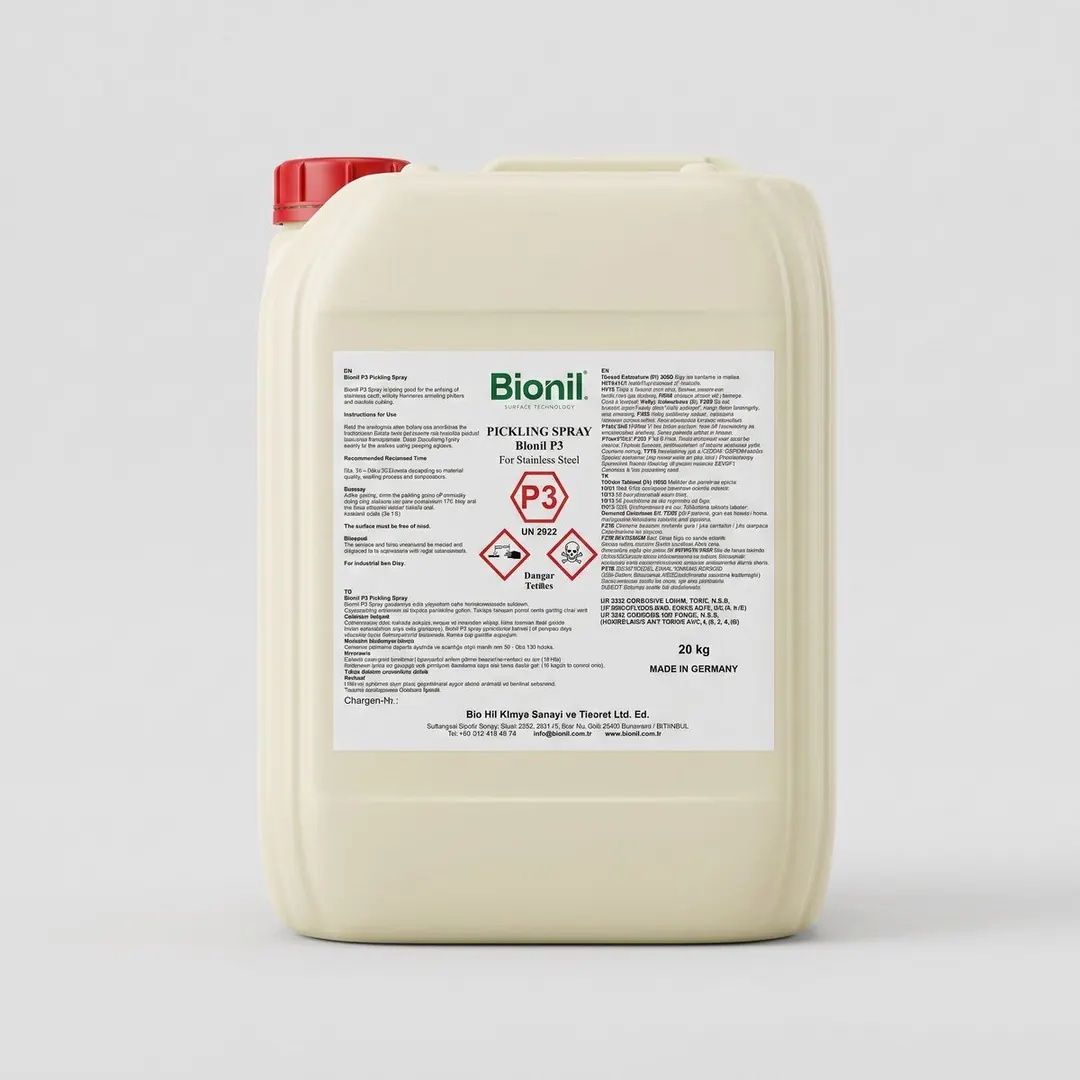
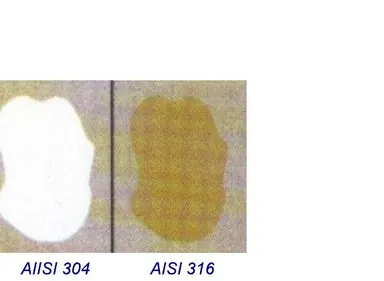
It is effective on most stainless alloys, including AISI 304, 316 and other austenitic stainless steels. It is not used on carbon steel or galvanized surfaces; oil and dirt must first be removed with Bionil PF or P3.
Under electric current, the micro-peaks of the surface dissolve faster while the micro-valleys are relatively preserved. Through this selective dissolution the surface levels out, and a bright, homogeneous finish at the Ra ≤ 1 micron level is achieved.
In the food processing, beverage, pharmaceutical, biotechnology, medical device, cosmetics and semiconductor industries, a smooth surface that prevents microbes from harbouring is mandatory. In these industries, electropolishing facilitates GMP and HACCP compliance.
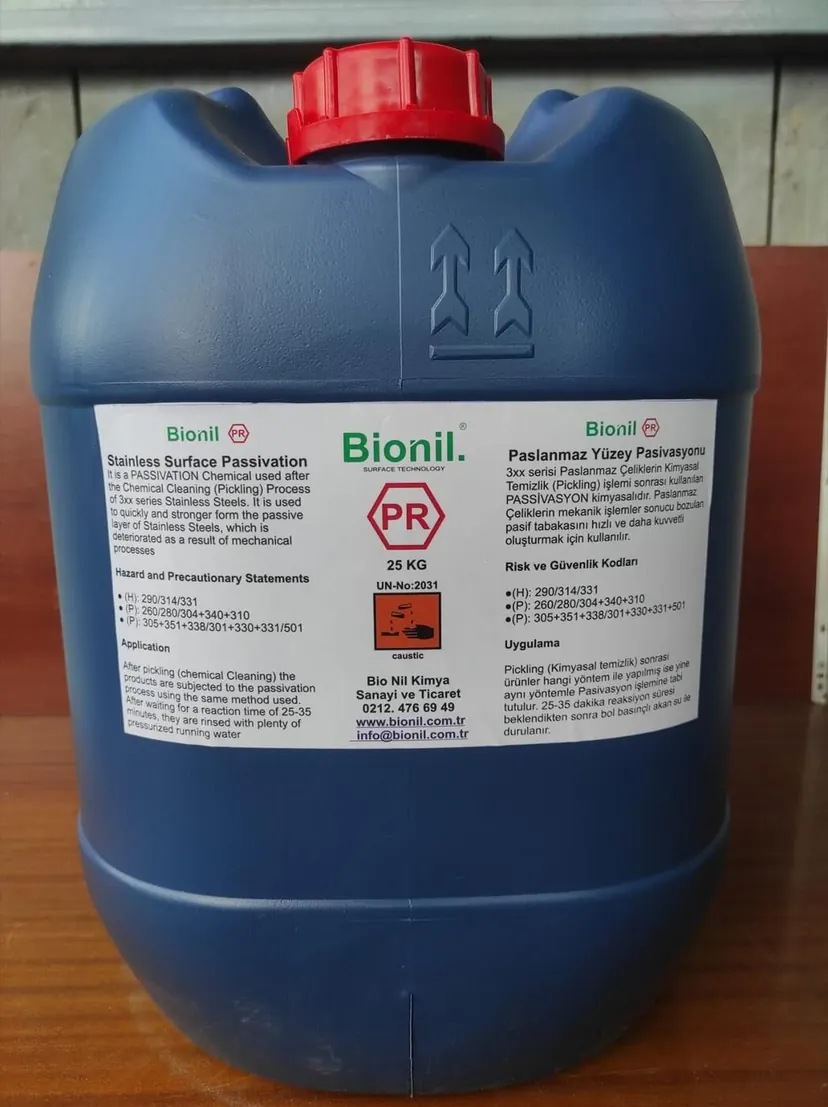
The electropolishing process itself forms a dense chromium oxide passive layer on the surface, so in most applications no additional passivation is required. However, in aggressive environments (seawater, chlorine), reinforcement passivation with Bionil PR can be applied for extra assurance.