Bio Nil
P2
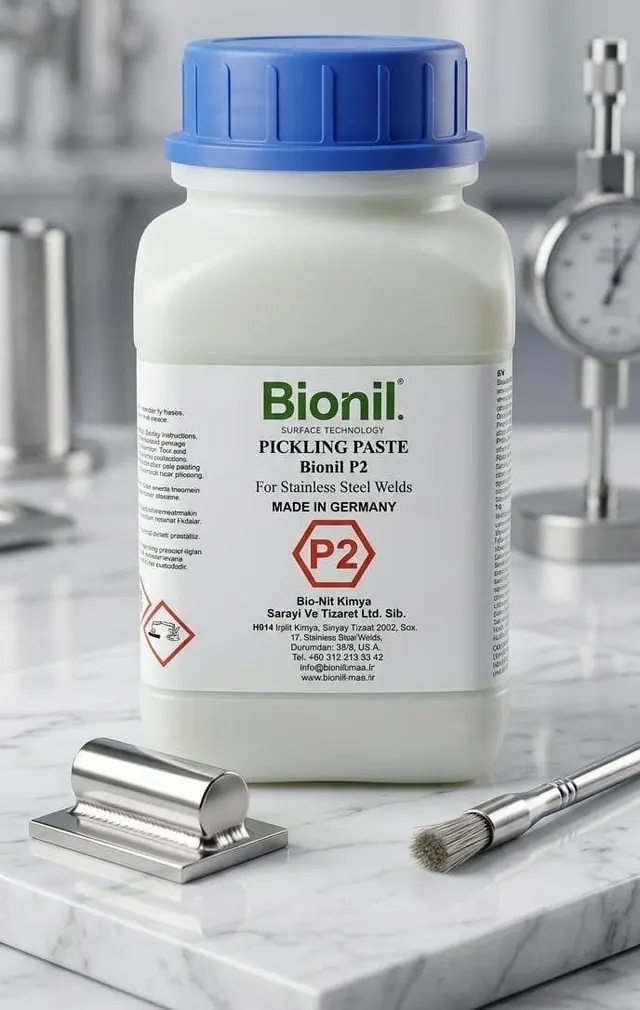
Bionil P2 Pickling Paste
Weld Stain Cleaning Paste
Brush-applied pickling paste that removes weld discolouration, heat-treatment scale, corrosion and rust stains from stainless steel weld zones.
View
AISI 304-316 Test Pen
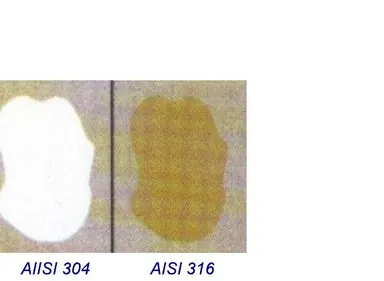
Sensitive to 316 steel. One drop is applied to a clean surface and the colour change is observed. A sequential yellow-green-brown colour change on the tested surface within 5 minutes indicates AISI 316 steel. The metal surface must be clean and at room temperature (15-20°C).
| Property | Value |
|---|---|
| Form | Pen (drop application) |
| Test time | 5 minutes |
| Steel type detection | AISI 304 / AISI 316 distinction |
| Colour change (316) | Yellow → Green → Brown |
| Surface temperature | 15-20°C (room temperature) |
The metal surface must be clean and at room temperature
Apply 1 drop from the pen onto the surface
Observe the colour change within 5 minutes
If the sequence Yellow → Green → Brown occurs, it is AISI 316
If there is no colour change, it is AISI 304 or another grade
One drop is applied to a clean surface and you wait 5 minutes. If a sequential yellow, green and brown colour change occurs, the material is AISI 316. If there is no colour change, it is AISI 304 or another alloy; the molecular sensitivity of the test is based on molybdenum ions.
The reagent reacts only to the molybdenum present in 316. If the colour does not change, the material contains no molybdenum, meaning it is AISI 304, 304L or another stainless steel grade. This clearly indicates that the material is not 316.
Yes. Once the test is finished, the surface must be rinsed with water or wiped with a damp cloth. If reagent residue remains, it can cause localized corrosion over time; the surface must be cleaned, especially in food and pharmaceutical applications.
For reliable results, the surface must be at room temperature, 15-20°C. On a hot surface the reagent evaporates too quickly and the colour reaction remains insufficient; on a cold surface the reaction slows down and false negative results may occur.
Monil is a screening tool designed for rapid on-site identification. It does not replace an official material certificate or a 3.1 document; however, it is extremely reliable for incoming raw material inspection, sorting of mixed stock and quality-control screening tests.