Bio Nil
PF
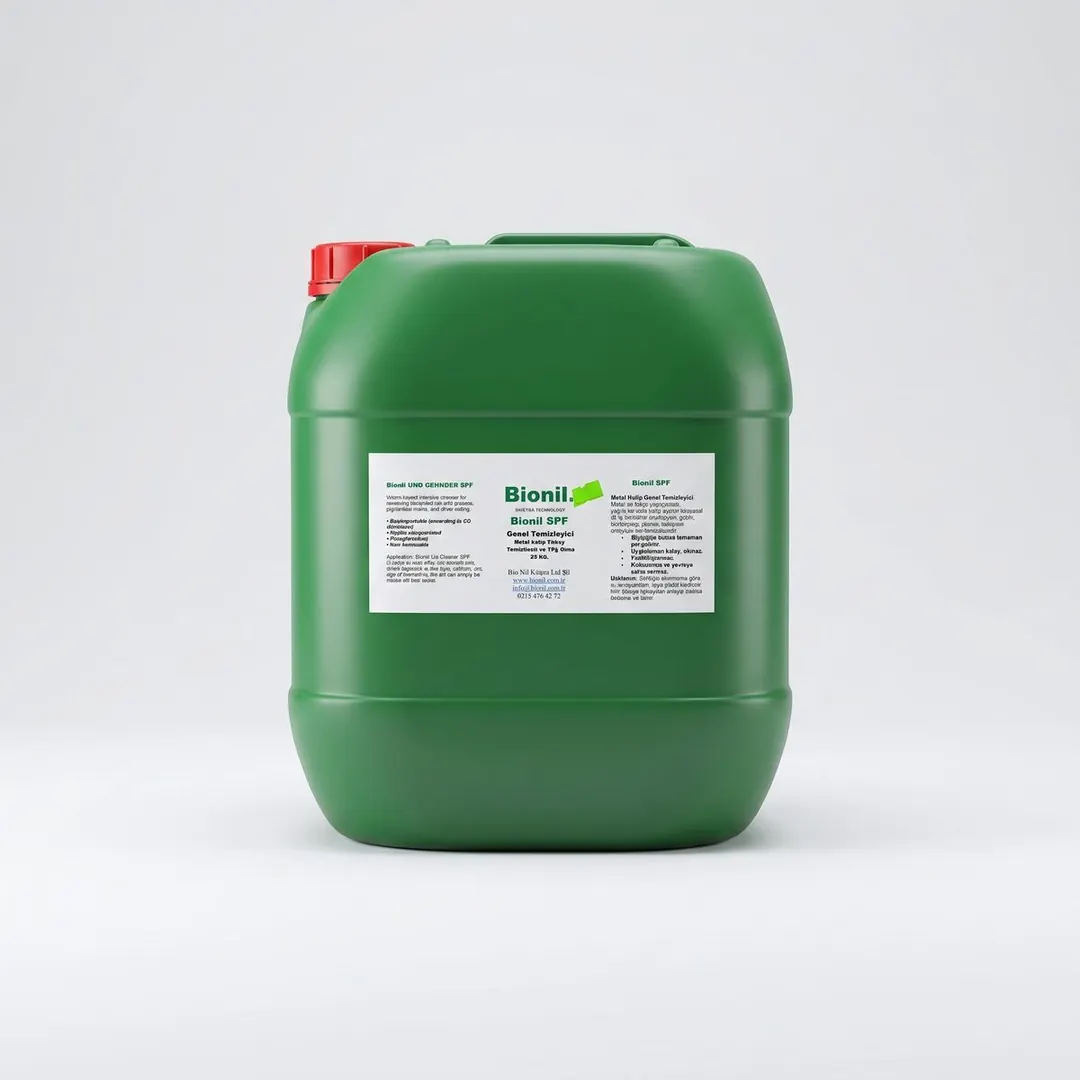
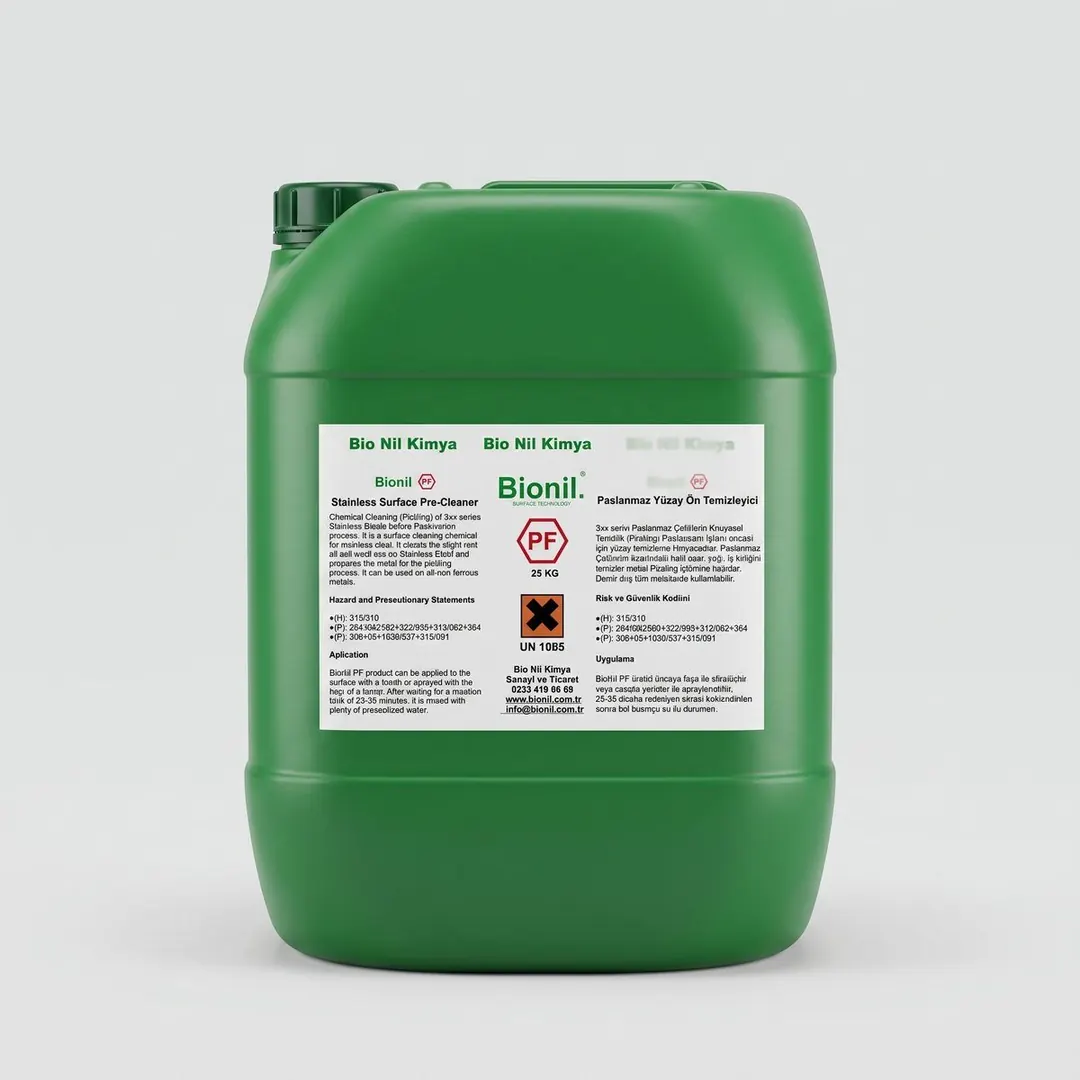
Bionil PF Pre-Cleaning
Weld and Surface Pre-Cleaning Liquid
Pre-cleaning liquid that removes fabrication contamination, oil, grease and light pitting from stainless steel and other non-ferrous metal surfaces.
View
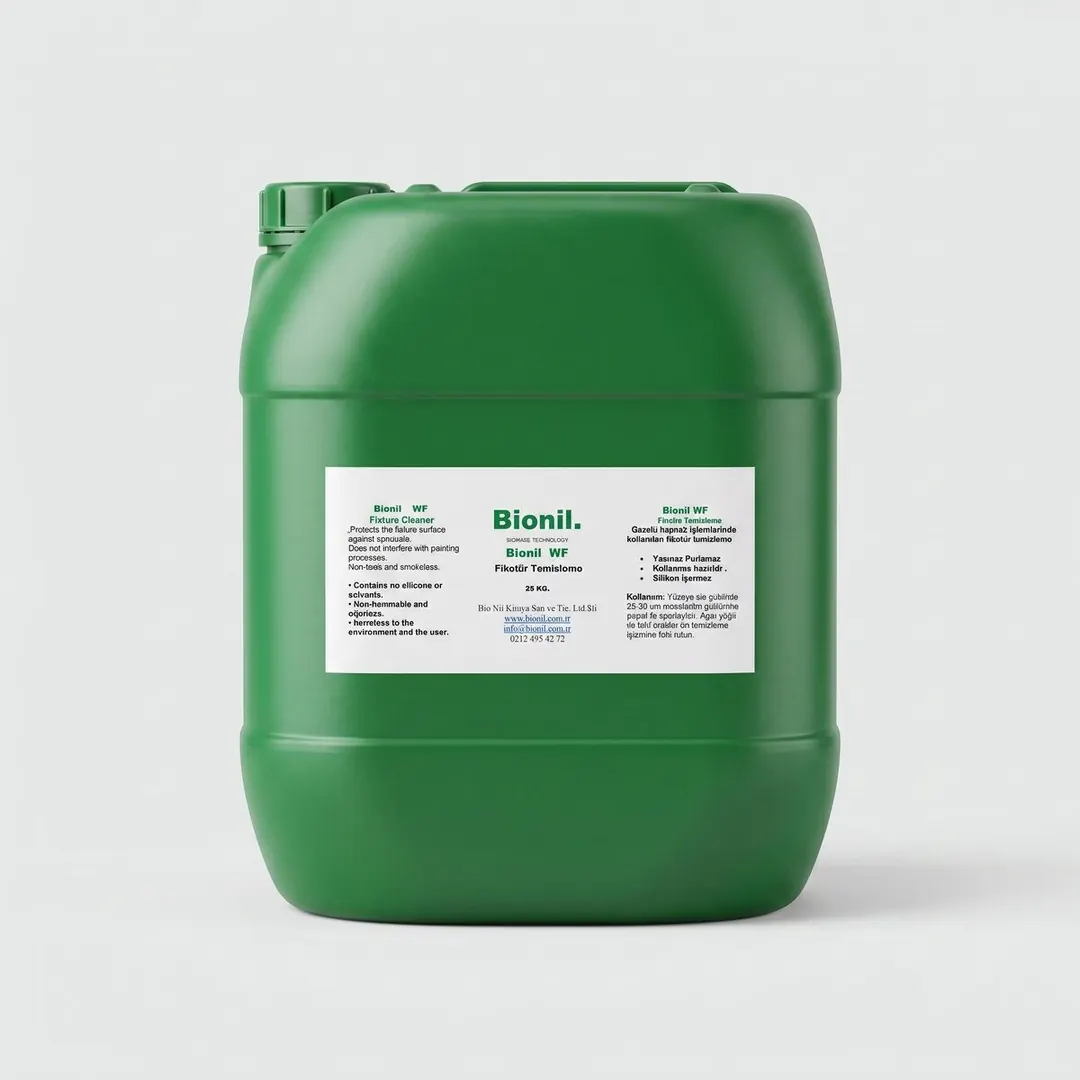
Cleaner for Fixtures and Robot Welding Units
It removes oil, manufacturing dirt, soot and smut from welding gases, and other contamination and build-up that form on robot welding units and fixtures. It does not cause rust on metal surfaces. After application the surface must be dried with air. Cleaning should be repeated periodically.
| Property | Value |
|---|---|
| Form | Liquid (to be diluted) |
| Dilution ratio | 1:10 - 1:20 with lukewarm water |
| Application pressure | Air gun at 0.2-1.0 bar |
| Dwell time | 15-30 minutes |
| Rusting | Does not cause rust on metal surfaces |
Dilute 1:10-20 with lukewarm water
Spray onto the surface with an air gun at 0.2-1.0 bar
Wait 15-30 minutes
Dry with air
Depending on production intensity, weekly or fortnightly intervals are recommended. On robot welding lines, soot, smut and adhered spatter distort the fixture's reference points; regular WF cleaning preserves the dimensional repeatability of parts and OEE values.
For heavy soot and smut build-up, the 1:10 ratio (more concentrated) is preferred for a quick result. For light, daily routine maintenance the 1:20 ratio is sufficient and provides economical use. The operator can increase or decrease the concentration according to the condition of the surface.
Yes. After WF application no moisture must remain on the fixture surface; otherwise the moisture evaporates during the welding process and causes porosity defects. All recesses and gaps must be dried with compressed air (0.2-1.0 bar).
Yes, it is specially formulated for robot welding fixtures and clamping apparatus. It is applied during the robot cell's offline (non-production) periods; the surface is coated with an air gun or manual spray, left to dwell and then dried.