Bio Nil
PF
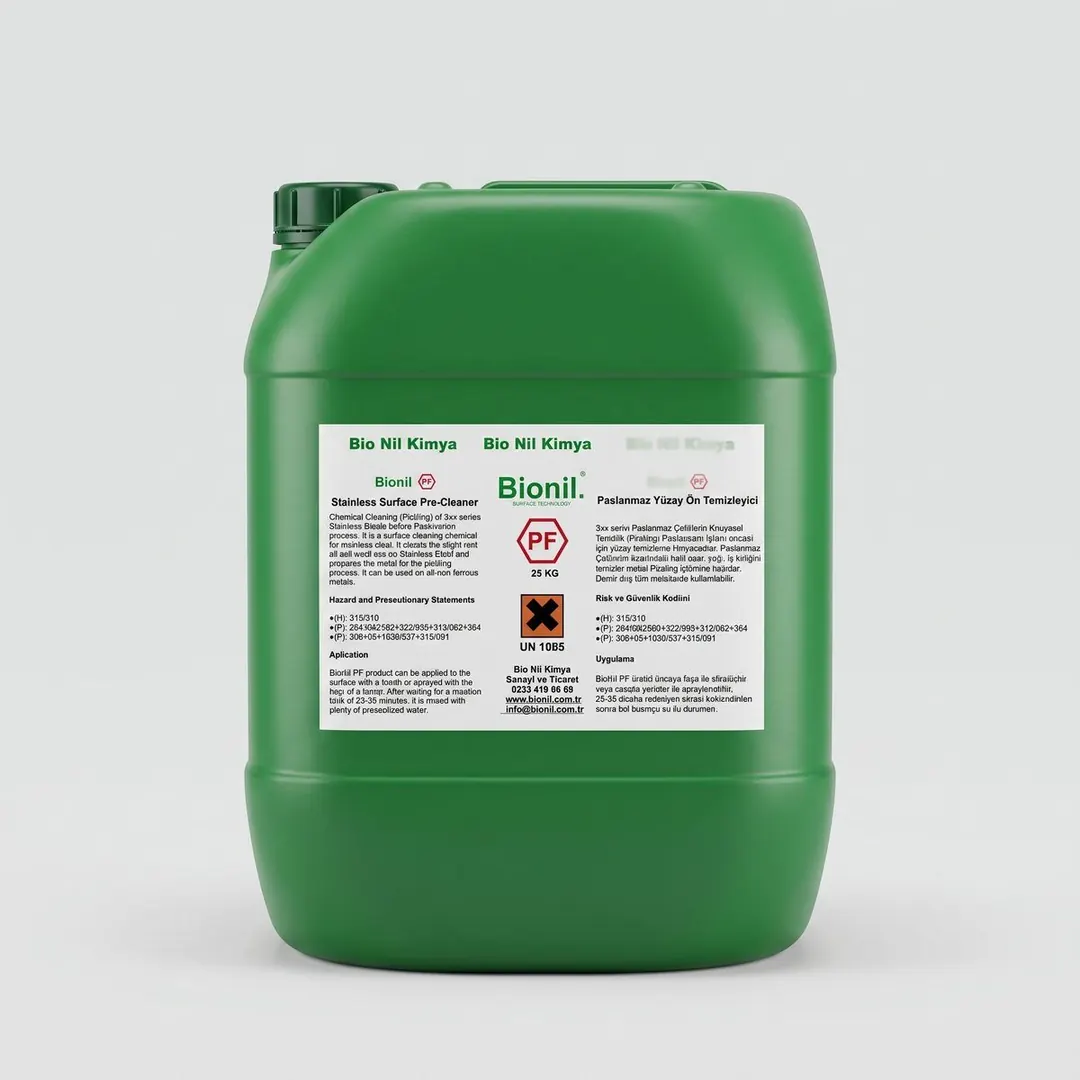
Bionil PF Pre-Cleaning
Weld and Surface Pre-Cleaning Liquid
Pre-cleaning liquid that removes fabrication contamination, oil, grease and light pitting from stainless steel and other non-ferrous metal surfaces.
View
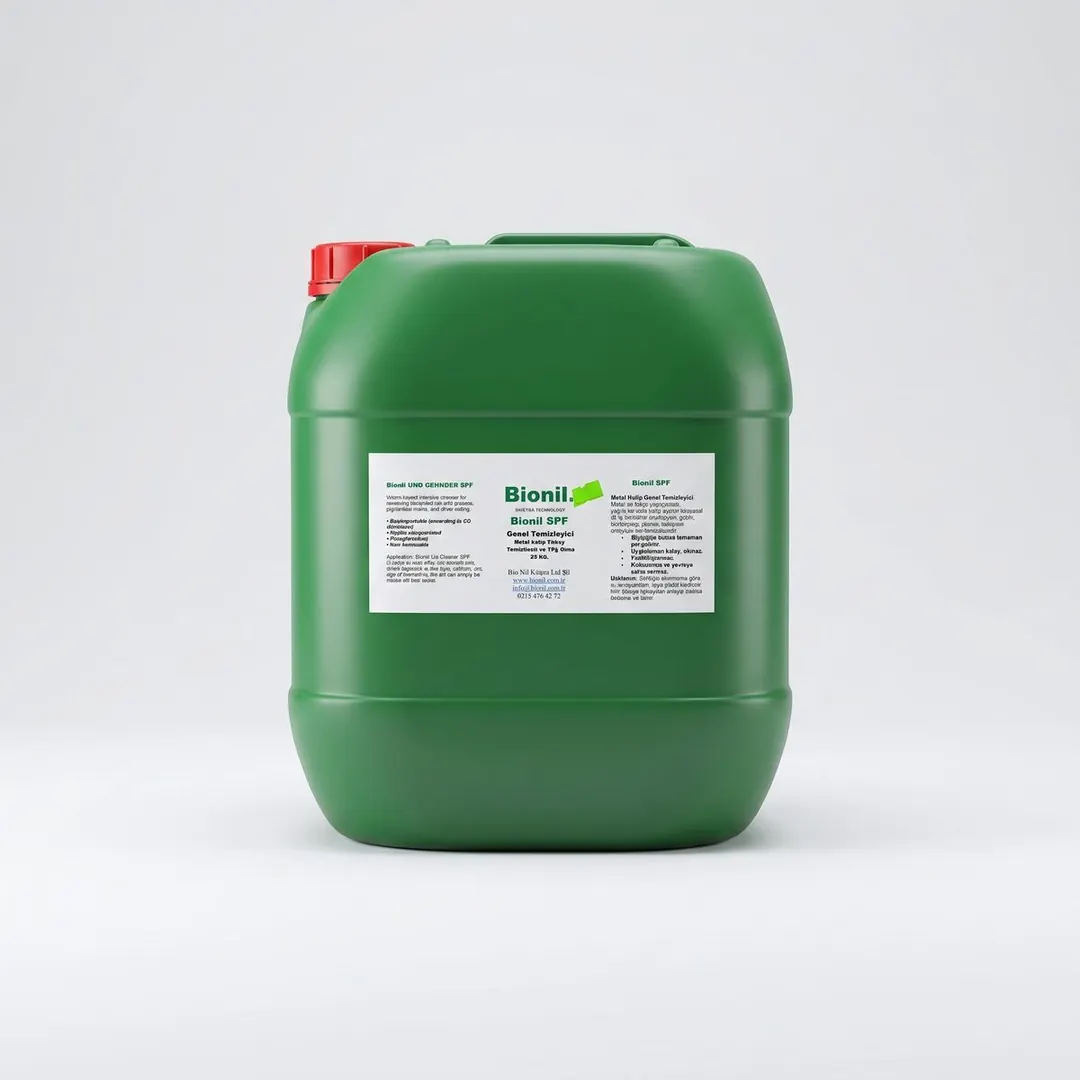
Low-Viscosity, Foaming Cleaner
Bionil SPF is a low-viscosity, foaming product. Thanks to its foam effect it stays in contact with the soil for a long time and delivers visible cleaning. It is the foaming version of the Bionil S series.
| Property | Value |
|---|---|
| Form | Liquid (foaming) |
| Viscosity | Low |
| Foam | Foaming (long contact time) |
Apply diluted with a foam machine or hand sprayer
Wait until the visible foam dissipates
Rinse
Foam extends the contact time of the liquid cleaner with the surface. While a liquid runs off within minutes, foam clings to the surface and keeps softening the soil. Especially on vertical walls, equipment exteriors and structures with complex geometries, it increases contact time by 3-5 times.
Bionil SPF, diluted to 2-5%, is mixed with pressurized air using a foam machine (foam lance or foam cannon) and applied to the surface. After the foam has spread, wait 5-15 minutes, then rinse with pressurized water. It is a common method in areas such as food plants, bus washing and metal surface cleaning.